P2PInbound value chain
Procure to Pay
Supplier lifecycle, purchase requisitions, PO dispatch, three-way matching, receiving, and accounts payable.
The application layer
CPG, AEC, wine, sports and entertainment, healthcare. I sit alongside the people who already run the work.
ERP programs fail on people, vendors, SI work, and data. Nobody owns the map above them.
First port of call is the CFO. The application layer comes down to the ERP and the P&L. For most enterprise operators, the WMS, MES, and supply chain sit next to it, defending gross margins and protecting Operating Income.
Core Architecture
Best practice where you are standard. Your sauce where you are not. The work is knowing which is which, then anchoring the systems and processes to a sovereign company core.
Most of the estate should look like a well-run peer. A thin slice should not. That slice is what makes the company distinct.
Whether an operator runs four platforms or fourteen, the application layer comes down to two structural slices of the same core: the systems that run the estate (The Systemverse) and the universal business process value chains that route through them (The Six Constellations).
I. The Systemverse
Named systems · customer-side command
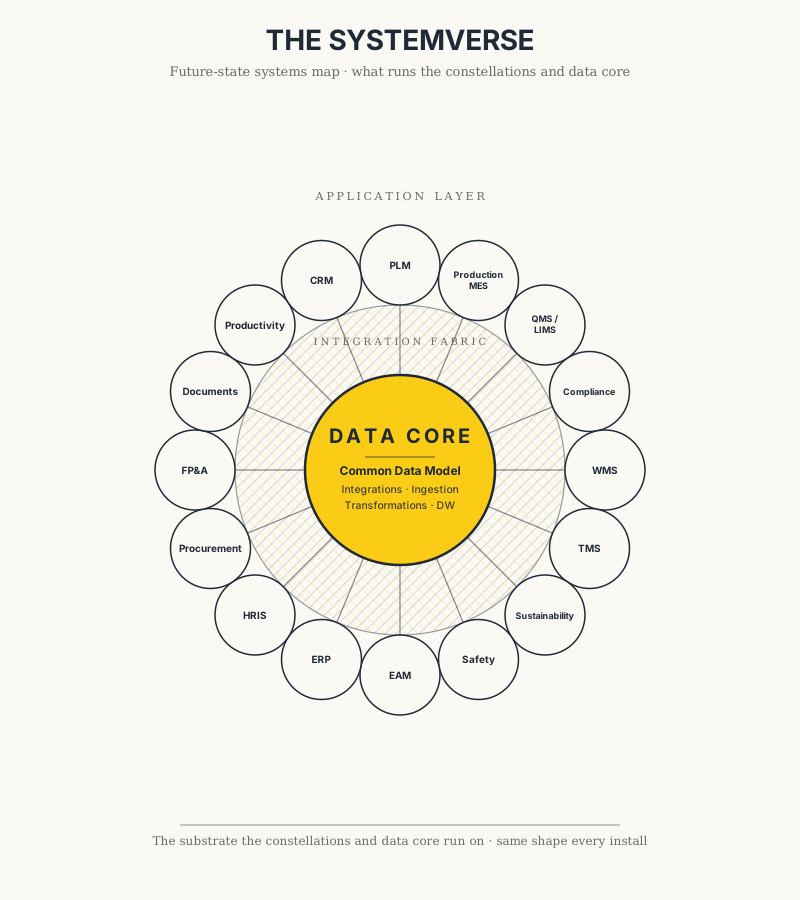
The estate picture, live
Gold routes from the data core to the systems that run the work.
II. The Six Constellations
Universal process frame · bespoke fill
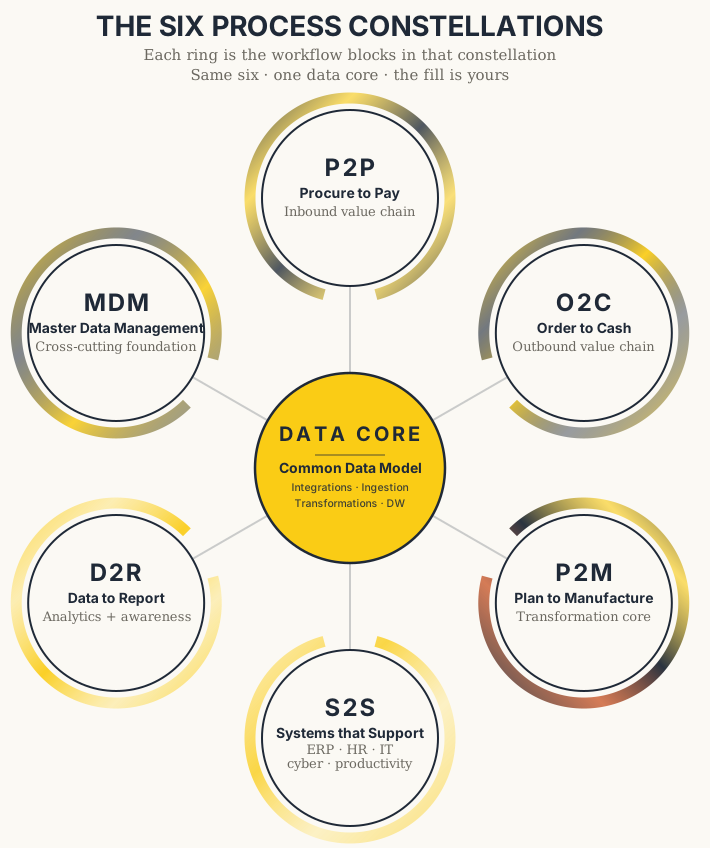
The workflow rings, live
Each outer band is the workflow blocks in that constellation. Same six every company. The mix is yours.
Supplier lifecycle, purchase requisitions, PO dispatch, three-way matching, receiving, and accounts payable.
Customer master, pricing engines, order entry, depletions, fulfillment, billing, and accounts receivable.
Demand planning (S&OP), MRP, BOMs, plant SCADA/MES automation, scheduling, and batch traceability.
The ERP side and the HR side. ERP runs all three primaries; HR/HCM is the people side none of those chains own. IT, cybersecurity, and productivity span with them.
Corporate planning, executive BI, financial consolidation, margin telemetry, and statutory reporting. Every enterprise has this — the old record-to-report spine, widened to the data that steers the company.
Item master, customer master, vendor master, chart of accounts, and governance across the estate. The missing link I keep finding on transformations.
The Systemverse maps the software. The Constellations map the process flows. The Beehive carries the people. The six flows cross the functional groups so accountability never falls between vendor cracks.
Controls
At the application layer, cyber is not a product next to the ERP. It is who can get in, what they can reach, what can write, and whether you can prove it. Same rail as the books. A SOX look asks who can change the ledger and whether the record would hold. If you cannot answer that, you do not own the map.
Identity
Who is on the estate. Named people, not a shared login next to the general ledger.
Access
What they can reach across ERP, WMS, and the rest of the stack, and what they cannot.
Segregation of duties
Who can change the books. Posting, approving, and paying are not the same hand.
An evidence trail
What ran, what was touched, and whether it finished. A record that would stand a SOX look.
The operation stays up while those hold. Once agents can reach the same estate, last move and prove-what-happened sit on this rail. That is not a second program.
Who I have sat with
Client Portfolio
Past transformations, leadership, and operational delivery
CPG, Wine & Food




Architecture & Construction



Sports, Entertainment & Healthcare



All product names, logos, and brands are property of their respective owners and are used for identification purposes only. Reference to past clients does not imply endorsement.
The estate
Contracts negotiated. Vendors run. Customer-side command.
Microsoft Dynamics 365 · Finance & Supply Chain / Business Central
SAP · S/4HANA & ECC
Oracle · Enterprise Financials
NetSuite · Cloud ERP
JD Edwards (JDE) · EnterpriseOne / World
OneStream · Enterprise CPM & Financial Close Consolidation
Solver · Corporate Planning, Budgeting & Reporting
Workday · Enterprise HCM & Core Human Capital
UKG · Workforce Management, Time & Labor, Payroll
Tebra · Electronic Medical Records (EMR)
ProLeiT · Brewing & Process Automation MES
Ignition · Industrial SCADA & Plant Floor Execution
Infios · Warehouse Management System (WMS)
MercuryGate · Transportation Management System (TMS)
John Galt Solutions · Atlas Demand Planning & S&OP
1WorldSync · Master Item Data & GDSN Network
Aras · Product Lifecycle Management (PLM)
Brightly Asset Essentials · Enterprise Asset Management (EAM / CMMS)
Procore · Capital Project & Construction Management
Salesforce · Enterprise CRM & Sales Cloud
VIP (Vermont Info Processing) · 3-Tier Beverage Distribution & Depletions
NielsenIQ · Syndicated Retail & Market Measurement
Commerce7 · Winery & Craft Beverage DTC, Clubs & Tasting Room POS
Shopify · Enterprise Omnichannel eCommerce
Toast · Hospitality, Taproom & Restaurant POS
Databricks · Unified Lakehouse & Analytics
Microsoft Fabric · Enterprise Data Fabric
Azure Data Lake · Cloud Data Storage
Boomi & Fivetran · iPaaS & Automated Data Pipelines
Power BI · Executive Reporting & BI
The Human Operating Model
“Happy systems, happy people.”
Core Operating Doctrine
The market is consumed with whether AI agents will replace jobs. Tools shift and routine toil disappears, but people remain the unmistakable soul and competitive edge of any enterprise.
When systems fight the frontline with bad data and fragmented silos, people spend their days firefighting. When systems are unified, governed, and joyful to use, the friction vanishes—and the business sings. That is the Beehive.
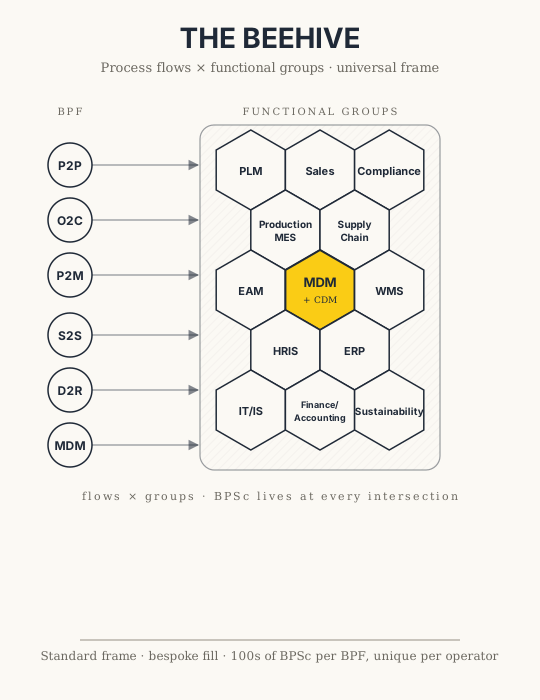
The human operating engine, live
The six process flows crossing the functional groups.
How work actually moves across functions · from floor to board.
Human delivery mechanics
Sovereign ownership
I hold the roadmap, decisions, and timeline on one customer-side rail. Partners deliver into it, but your team holds the keys from day one. The business does not rent command.
Frontline respect
From warehouse bays and plant floors to the executive boardroom, nobody is assumed. We build alongside the operators who carry the daily reality of the company.
Cultural adoption
Go-live is a milestone, not the finish line. Training, SOPs, and adoption are designed so the team feels empowered, confident, and proud to run the new way.
The transformation
This layer, taken through production. Vendors are trades. Someone still has to own the build.
Most recent: CIO, Sierra Nevada Brewing (~$420M). $15M estate transformation on a company-owned data core. Rebuilt the IS function.
Earlier: CEO/CTO, Timberline. $250K to $130M. Systems that had to hold in the field.
Healthcare: HCA Healthcare. Tebra EMR on that estate, including medical-spa work on the same record.
$350M post-M&A estate in 11 months. Stalled $8M ERP recovered. Company ownership preserved.
30 years · 50+ implementations · 15 full transformations · $100M–$1B operators