Agentic AI / A personal weblog
The next wave works on what you know.
I love this moment in technology. My work has always been about connecting people, systems, and data. Now, agentic workflows are opening new possibilities at that intersection. This is where I build, question, and write.
01 / From the notebook
Observations & questions.
Observations and questions from the intersection of enterprise work and agentic AI.
Anchor Essay · Working Position
Company knowledge. Human authority. Useful work.
Why durable applied agentics begins with maintained enterprise records, explicit human authority, and verifiable results that the business can run.
“What does the experienced person know that the workflow does not?”
Enterprise procedures capture the happy path. The real operating logic lives in the minds of experienced people who handle exceptions, weigh conflicting priorities, and know when standard rules fall short. Agentic systems must connect to that tacit judgment rather than assuming standard procedures tell the whole story.
“When should an agent act, and when should a person decide?”
Autonomous action is easy to demonstrate in a sandbox, but consequential in production. Clear governance requires explicit boundary design: agents gather context, synthesize history, and execute permitted steps, while accountable people retain final decisions on money, commitments, and exceptions.
“What makes a useful demonstration become dependable enterprise work?”
A prototype shows what is possible under ideal conditions. Production requires verified enterprise data access, strict authorization, observable telemetry, graceful failure modes, and operational ownership by the business. Without those, a demonstration never becomes dependable work.
02 / The inflection
We are here.
I have spent my career connecting people, data, and systems. Each technology wave brought new capability—and years of work to make it useful.
What interests me now is where I can begin: bringing AI agents into a useful workflow on the systems already in place. The company already holds much of what gives that work its value.
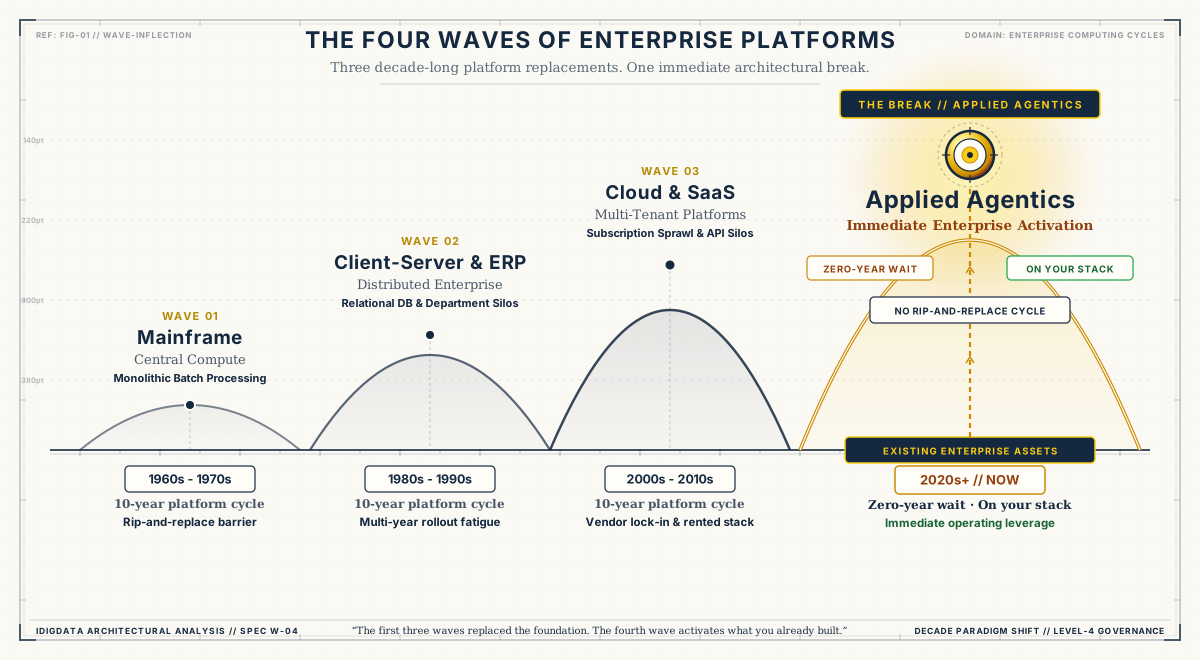
The opportunity is here. Making it work still takes clean enough information, explicit permissions, testing, and people prepared to own the result.
03 / The position
Company knowledge.
Human authority.
Useful work.
For me, enterprise agentics is the connection between these three things.
I build on what the company knows.
Why an order is held. Which exception needs the controller. What the experienced person sees that the procedure misses. I connect that knowledge to maintained records and the people responsible for them.
The mandate is human.
I define what the agent may see and do, which decisions people retain, and who can stop the work. I want to follow a result back through the information, actions, and approvals that produced it.
The result has to hold up.
I use rules where the step is clear and agents where interpretation helps. I test exceptions and recovery, watch the cost of reaching a useful result, and equip people to run and improve the workflow.
04 / Applied agentics
I have taken this
into the enterprise.
In a CIO role, I put agentic applications into production on the company-owned data core, with training, controls, and business ownership.
A production example is evidence within its scope. The next workflow still has to earn its place.
The experience behind this position ↗Enterprise transformation management
Planning, milestones, cutover dependencies, and delivery evidence through go-live.
Governed software delivery
Traceable decisions, testing and delivery evidence, and human authorization.
Workflows across people and systems
Company-owned data, defined permissions, and human judgment at consequential steps.
05 / Direct correspondence
Continue the conversation.
Have a thought, a question, or a different perspective? Send me a note. It comes directly to me, and I will reply personally.
Private reader correspondence · No public comments · Straight to Rob