
Hold
Can the business safely hold them?
Governed data, a shared version of reality, clear ownership of what an agent is allowed to touch. Most AI readiness fails here, quietly, long before the model does.
Ownership of the work across people, data, systems, and the vendors that often end up managing themselves - with agentic AI landed on that same layer.
The paid work is the engagement - design, build, training, and transfer. What stays is owned capability. Software is the instrument of that engagement when it earns its place. That has been my approach with or without agentics.
Stakeholders, key users, and executives see the same picture of where implementation and deployment actually stand - not three reconciled status reports.
Done means both. Vendor sign-off alone is not done. That is where executive ownership, stakeholder alignment, change, and program control bind into one board the business can steer from.
The public spine is the six process constellations: how work moves across the company. Under each cluster hang the real workflows and workflow blocks. A constellation only lights when those are green on both axes - happy systems, happy people - in one visual. DigOps runs this on its own first constellation today as practice proof.
Most programs leave a binder that dies after go-live. This approach leaves operating memory that stays alive: SOPs created, generated, and updated with the work - tied to how the business actually runs. Proven inside Sierra Nevada Brewing and across embedded implementations: the leave-behind that makes adoption real after I leave.
The newest fix only looks new: forward-deployed engineers from frontier-model and platform companies - same motion as System Integrators (SI). They bill on top while the duct tape stays. You cannot automate dysfunction, and you cannot overlay your way past ungoverned data. That is why the ownership layer is the prerequisite, not the upsell.
Hold
Governed data, a shared version of reality, clear ownership of what an agent is allowed to touch. Most AI readiness fails here, quietly, long before the model does.
Absorb
People who know how to delegate, verify, and own the output. Workflows redesigned around the work. A human on every consequential call. Capability the organization can't validate will not survive contact with the work.
Answer both and agentic capability becomes decision integrity. Skip them and you have automated the disagreement at scale.
Sierra Nevada Brewing - as CIO (~$420M), put what the market now calls agentic AI into production with governance, training, and business ownership - before the term was common. Integration-at-scale under business-owned control.
idigdata - token and model optimization, discovery loops, human-validated production paths - so agentics lands as owned capability, not a billed overlay.
Diagnosers explain. Overlay teams bill. Operators finish.
Under the engagement I bring a pro agentic studio that plans, builds, ships, observes, runs token economics, and governs the work - the collective stays with the shop; you hire the engagement it makes possible.
What you keep is the operating approach made durable: the control center for integration and change, agile tied to roadmap, green / green visibility, living SOPs, and the map of constellations down to workflows. When the business is ready, that map becomes the ground for agentic workflow applications - humans and agents working in synthesis on firm-specific workflow IP - with DigOps as practice proof of the direction, not a seat you rent.
Names, if useful later: the Rig is the studio; the approach asset is the twin and control frame you keep; FlowCraft is the agentic workflow runtime on that map.
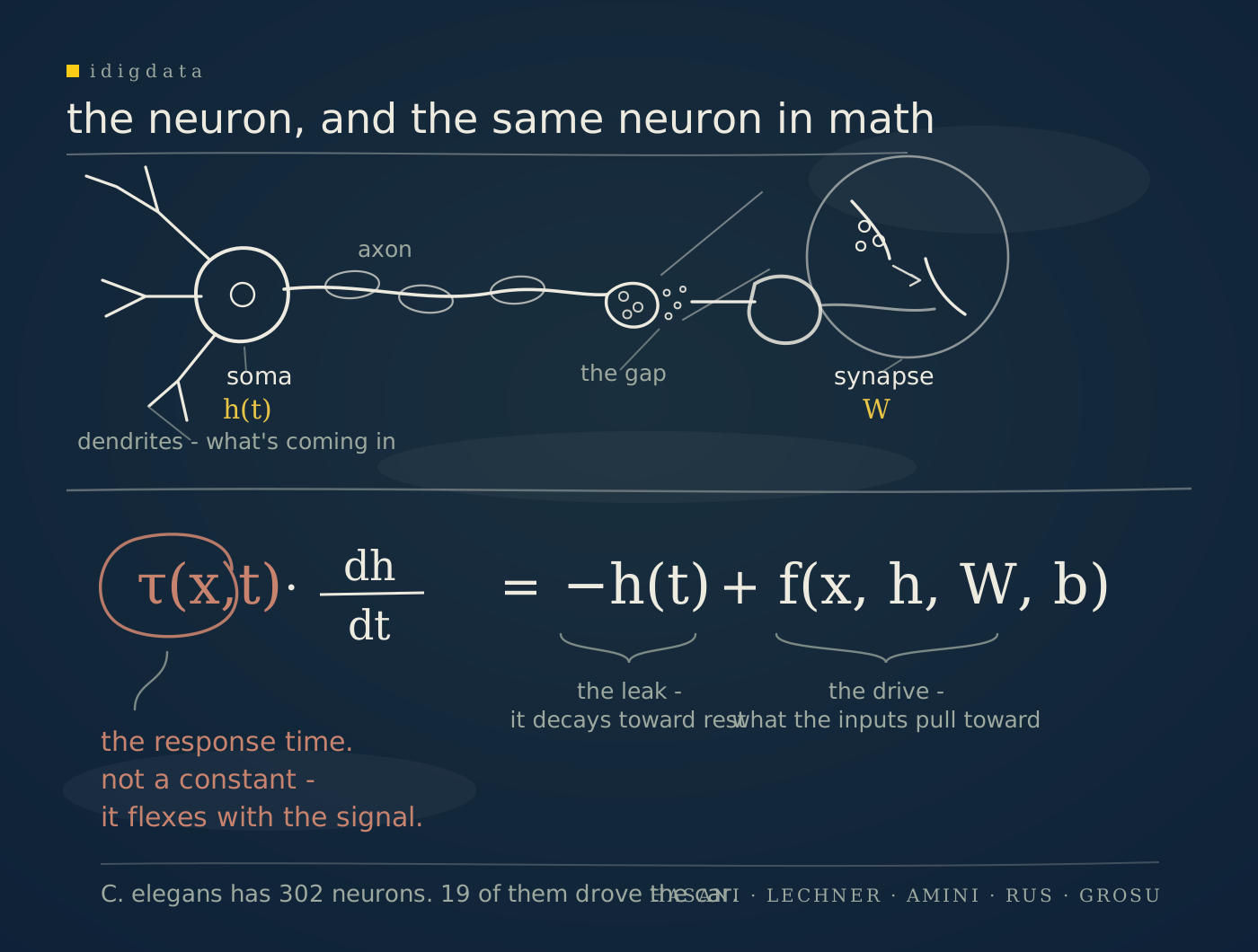
That flex with the signal instead of firing once and forgetting.
ERP, WMS, MES, CRM/CPQ, MDM, HRIS, analytics, cybersecurity, and the integration fabric that ties them - including multi-entity, keep-running modernization. Platforms matter; they cannot own the transformation. Depth of the capability map lives on Approach.
If the mandate is real
Facing pressure to transform and put agentic AI into production without losing control? Bring the real situation. Practical path, owned landing.
Start a conversation